Key Takeaways:
- Manual, spreadsheet-based rate tracking cannot keep pace with a market in which a dozen or more carriers each update Multi-Year Guaranteed Annuity (MYGA) rates on independent schedules.
- Custom, filtered rate reports built around a business’s carrier list, product mix, and update cadence are replacing the manual compilation model.
- Stale rate data carries costs beyond a missed sale, including suitability concerns, credibility issues, and compliance exposure.
- Under the NAIC’s Suitability in Annuity Transactions Model Regulation (#275), producers are required to document that a recommendation reflects the consumer’s best interest at the time it is made, which places a premium on current data.
- A carrier-connected rate feed eliminates a category of risk that is easy to underestimate until it surfaces in a client conversation or a compliance review
Introduction
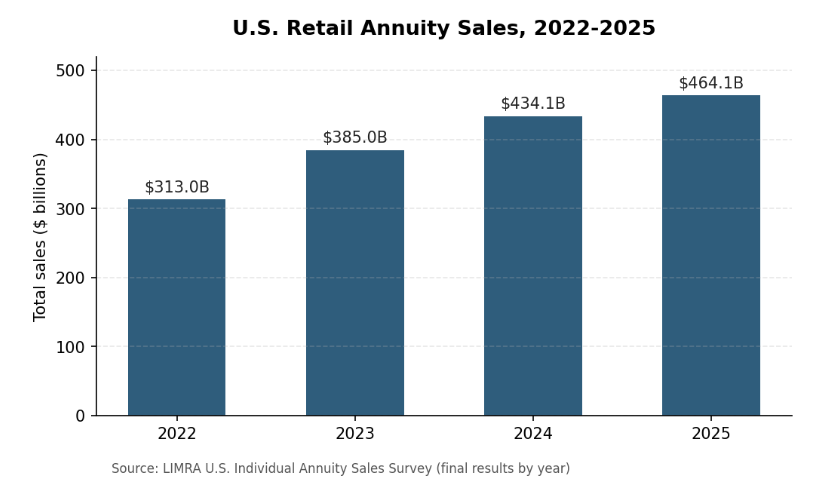
Total U.S. annuity sales reached $461.3 billion in 2025, marking the fourth consecutive year of record volume. Fixed-rate deferred products, the category that includes MYGAs, delivered over $160 billion of that total. This scale of growth has brought more carriers into the market, each on its own filing calendar and rate update schedule. Distributors now face a higher volume of variables to monitor, and clients expect rate comparisons accurate to the day.
For years, organizations tracked rates through a patchwork of PDFs, rate sheets, and email updates, compiled by hand into spreadsheets that were often outdated before completion. That method held up when the pool of MYGA carriers was small, and rate changes were rare. It no longer holds up. Businesses are now adopting custom rate reporting, filtered data built around their book of business to close that gap.
What Is a MYGA and Why Does Rate Accuracy Matter?
A MYGA guarantees a fixed interest rate for a defined term, typically ranging from three to ten years, in exchange for a lump-sum premium. The product appeals to investors for clearly defined reasons: a guaranteed rate, protection of principal, and tax-deferred growth, without exposure to the volatility of market-linked instruments.
The distribution side presents a more complex undertaking. A proper comparison between two MYGAs requires aligning CDSC schedules, market value adjustment terms, minimum and maximum premium thresholds, and carrier eligibility across distribution channels. These variables do not move in tandem. A wealth management business structuring options for a client, or an RIA evaluating a MYGA against alternative retirement income products, is effectively comparing a moving target across numerous carriers at once.
Manual Spreadsheets vs Custom Rate Feeds: How Businesses Track MYGA Rates Today
Any company relies on 2 methods only:
The first is manual tracking. An operations or product professional gathers rate sheets and PDFs from each carrier, records the figures in a spreadsheet, and updates the file whenever a change occurs. This method functioned adequately when only four or five carriers required monitoring and rate changes were infrequent.
As carrier lists expand and updates occur more frequently, the process becomes increasingly unreliable. A rate accurate on Monday morning may be inaccurate by Thursday, and maintaining a dozen sources manually requires more staff resources than most teams have allocated.
The second method is a custom data feed, filtered to the specific carriers and products relevant to a business’s operations and refreshed on a schedule aligned with business needs, whether weekly, monthly, or on demand. The resulting report is structured around the comparisons a team requires, eliminating the need to reformat raw data after the fact.
The Hidden Cost of Stale MYGA Rate Data
The distinction between these two approaches does not surface immediately. It emerges later, in forms difficult to trace back to a rate sheet that was outdated by only a few days.
A recommendation based on outdated data represents, at minimum, a missed opportunity. At worst, it becomes a suitability concern, a credibility issue for the advisor who provided it, or evidence that a business cannot demonstrate reliance on current data at the time a recommendation was made. This distinction carries considerable weight.
The NAIC’s Suitability in Annuity Transactions Model Regulation (#275) requires producers to document that a recommendation reflected the client’s best interest at the time it was made. Broker-dealers bear an equivalent obligation through supervisory review, and RIAs are held to the same standard through fiduciary duty. All three parties are subject to a standard that becomes increasingly difficult to satisfy when the underlying data is already outdated.
MYGAs heighten this exposure relative to most other annuity types, as the entire value of the product depends on the exact rate secured at the point of sale. A comparison based on data even a few days old may already be inaccurate. Across a business’s full MYGA portfolio, a series of individually minor data discrepancies accumulates into a material exposure.
When Does Manual Rate Tracking Stop Working for Annuity Distributors?
A business working with two or three carriers and moderate volume may continue to manage a spreadsheet without significant difficulty. The equation changes once a carrier list expands beyond that threshold and clients expect a same-day response rather than a delayed follow-up. At that point, the resources required to maintain a manual process typically outweigh whatever simplicity it once offered. This trade-off is driving broader industry adoption of filtered, automated reporting as a standard practice rather than a solution reserved for larger businesses.
Conclusion
The annuity market shows no indication of slowing. With sales at record levels and an expanding number of carriers competing for distribution, the volume of rate data a business must track will continue to grow. A manually updated spreadsheet cannot keep pace with that rate of change, and the gap between current data and the data a team is actually working from is where cost and risk accumulate.
Custom rate reporting closes that gap. Rather than a report shaped by whoever last had time to update it, a business receives data filtered to its specific carriers and products, refreshed on a schedule aligned with its operations, and connected directly to carrier updates rather than dependent on periodic manual review.
Businesses that continue to compile rate comparisons manually, or whose current reporting does not reflect the specific products and carriers relevant to their operations, are encouraged to consider what a custom feed could offer their organization. Contact Beacon Annuity Solutions to discuss a live, carrier-connected rate feed tailored to your book of business.